
Currently Empty: ₹0.00



Blog
Will Your Child Be the ‘Odd One Out’? The High Cost of Ignoring AI Literacy in 2026
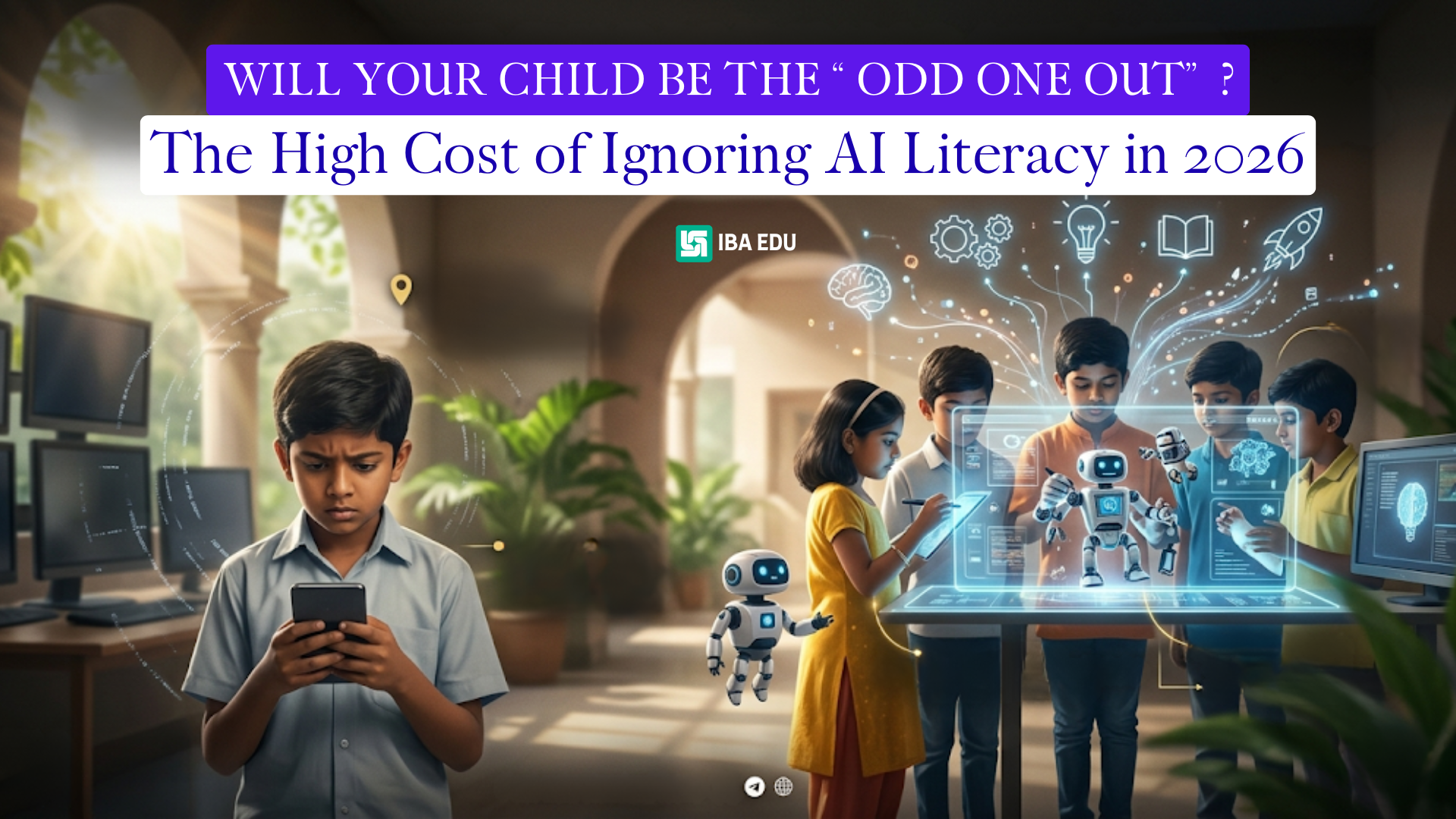
The AI Divide: Will Your Child Be the ‘Odd One Out’ in 2036?
We are exactly 10 years away from a world where AI isn’t a “tool”—it’s the air we breathe. In four days, the journey to mastery begins. Is your child on the list?
Book Free Parent Orientation | Batch Starts on April 1
The Silent Crisis of 2036: A Tale of Two Graduates
Imagine it is March 2036. Two young adults are entering the professional world.
The first has a traditional education. They are hardworking, have a degree, and know how to follow instructions. But they treat AI like a “Google Search” replacement.
The second graduate—let’s call them a “Super Kid“—understands the architecture of AI. They don’t just ask questions; they build “Agentic Workflows.” They don’t just write emails; they deploy AI-driven communication systems. They don’t just look for a job; they use AI to identify market gaps and launch a micro-business in a weekend.
In 2036, the first graduate isn’t just “behind.” They are obsolete.
The “AI Gap” isn’t a slow crawl; it’s a vertical climb. If your child lacks AI knowledge in the next 10 years, they won’t just face “competition.” They will face a world they can no longer speak the language of.
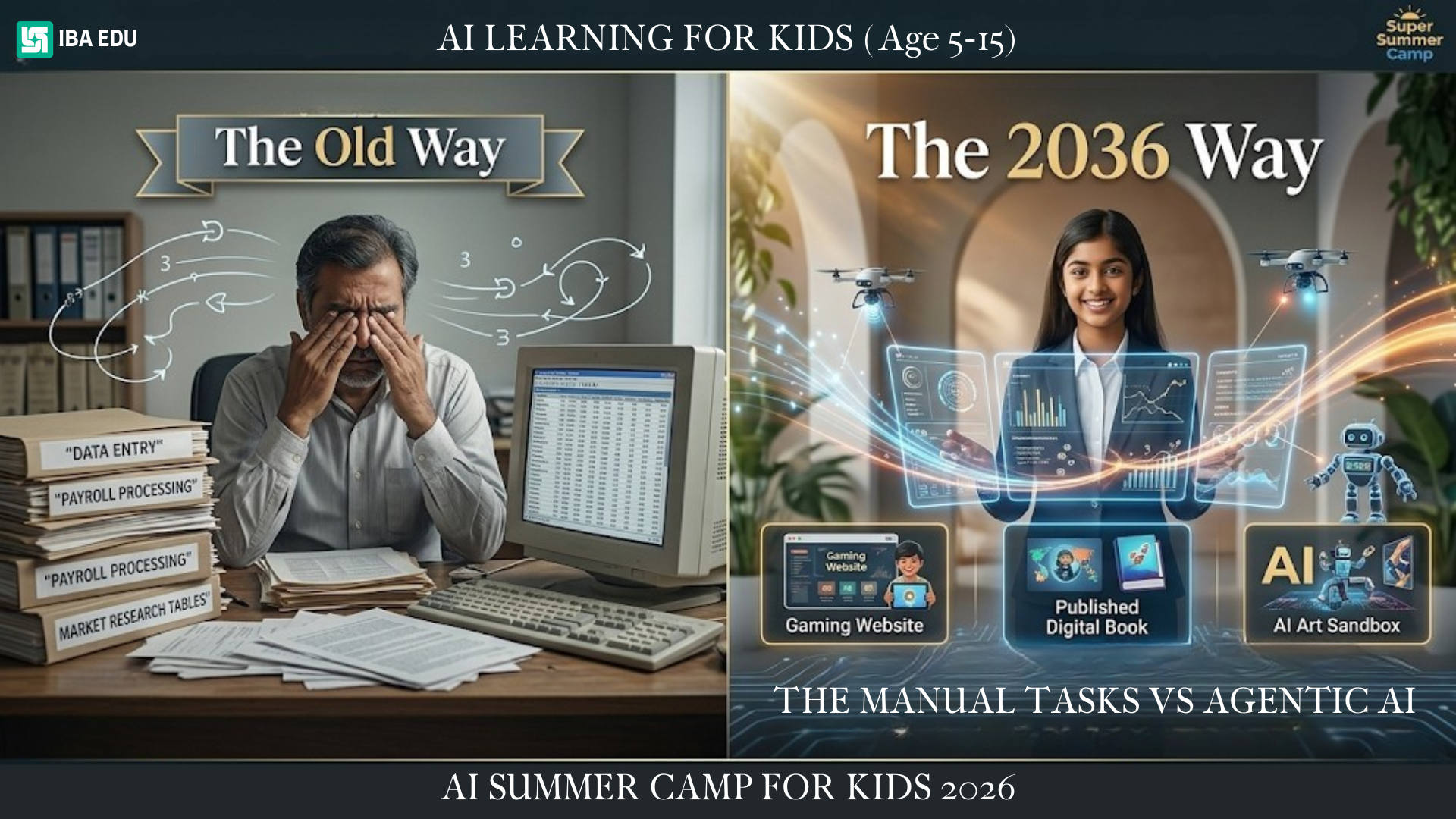
What Happens if a Child Lacks AI Knowledge in the Next 10 Years?
If a child enters 2036 without deep AI literacy—meaning the ability to prompt, build, and audit AI systems—the problems they will face are structural and severe.
1. The Death of the “Entry-Level” Role
Historically, young people “paid their dues” by doing basic research, data entry, or junior drafting. By 2036, these roles will not exist. AI agents already perform these tasks better, faster, and cheaper than any human junior. Without AI skills, your child will be “overqualified” for manual labor but “under-skilled” for the AI-orchestration roles that replaced entry-level jobs.
2. The Productivity Tax
A child with AI skills has a 10x Productivity Multiplier. They can do in one hour what a traditional worker does in ten. If your child lacks this knowledge, they will be forced to work ten times harder just to stay equal. This leads to burnout, lower wages, and a permanent “catch-up” cycle.
3. The “Black Box” Problem (Loss of Autonomy)
Lacking AI knowledge means your child will be a passive user of technology they don’t understand. When an AI makes a decision about their bank loan, their job application, or their legal rights, they won’t have the “Digital Forensics” skills to question, audit, or correct the machine. They will be at the mercy of the algorithm.
How They Will Be the “Odd One Out”
Socially and professionally, the “AI-Illiterate” will become the “Odd One Out” in three distinct ways:
In the Job Market: The “Co-Pilot” Mandate
In 2036, “Proficiency in AI” won’t be a bullet point on a resume; it will be the floor. If a candidate cannot demonstrate how they use AI to automate their own workflow, they won’t even make it past the initial AI-screener. They will be the “odd one out” who still thinks “typing speed” matters in a world of voice-to-action commands.
In Business: The Scale Barrier
Future entrepreneurship will rely on “Solopreneurship.” One person, backed by a fleet of AI agents, can run a multi-million dollar company. The child without AI skills will try to build a business the old way—hiring massive teams and taking on huge overhead. They will be out-competed and priced out of the market within months.
In Competition: The Creative Ceiling
The “Odd One Out” will be the person who tries to create “manually.” While their peers are using AI to generate 3D models, code functional websites, and publish books in days, the non-AI child will still be stuck on the first draft. Their “Human-Only” work will be seen as slow and primitive, rather than “artisanal.”
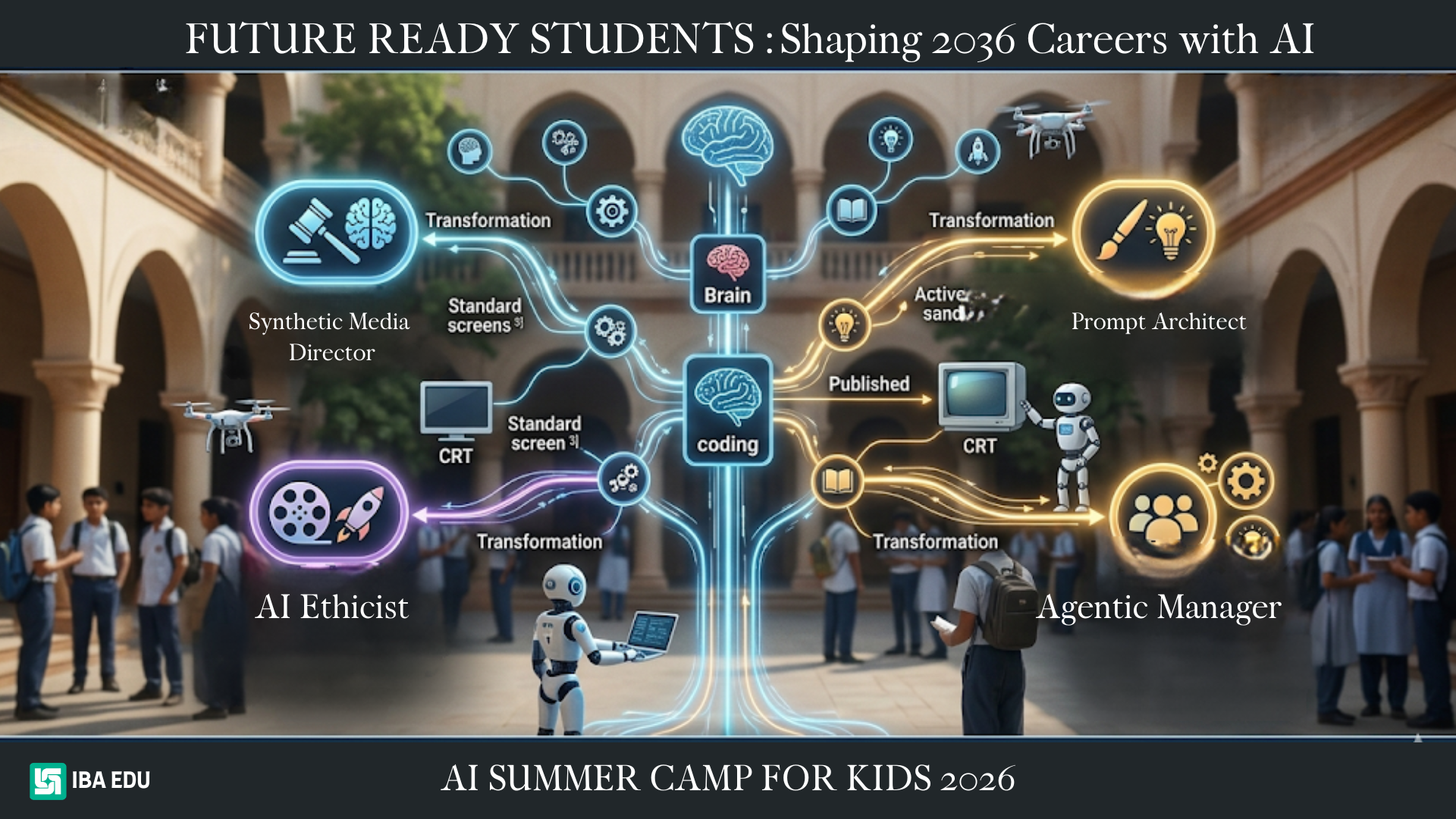
The Solution: From Passive Scrolling to “Agentic” Thinking
This isn’t about teaching your child to “code” in the traditional sense. It’s about teaching them Logic, Strategy, and Prompt Architecture. It’s about giving them the confidence to say, “I have an idea, and I know exactly which AI tool will help me build it.”
This shift in mental behavior—from a “Consumer” to an “Architect”—is what creates a rich mindset. When a child learns to create a story or a game with AI, they are learning Systems Thinking. This helps them handle personal life problems because they learn to see every obstacle as a “logic puzzle” that can be solved with the right strategy.
🚀 FINAL CALL: AI Super Summer Camp 2026 for Super Kids
April 1st – May 31st (The 60-Day Transformation)
We are now just 4 days away from the start of the most important summer of your child’s life. This is not a series of videos. This is Live, Interactive Mentorship where we build the 2036 toolkit today.
Why IBA EDU is Unique:
-
The 50-Hour Live Rule: No pre-recorded “zombie learning.” Every hour is live interaction.
-
The Portfolio Outcome: Your child leaves with a Website, a Published Book, and a Custom Game.
-
The “CEO” Mindset: We don’t teach them to “use” AI; we teach them to manage it.
⚠️ THE SEAT COUNTDOWN
As of this morning, March 27, 2026:
-
Total Seats: 50
-
Current Bookings: 45
-
Remaining Slots: 5
-
Registration Status: LATE-BIRD ENROLLMENT (Closing Imminently)
DO NOT LET THEM BE THE ‘ODD ONE OUT’
The next 10 years will be the most transformative in human history. Your child can either be a spectator or a leader. Secure their future before the final 32 spots are gone.