

Currently Empty: ₹0.00



Blog
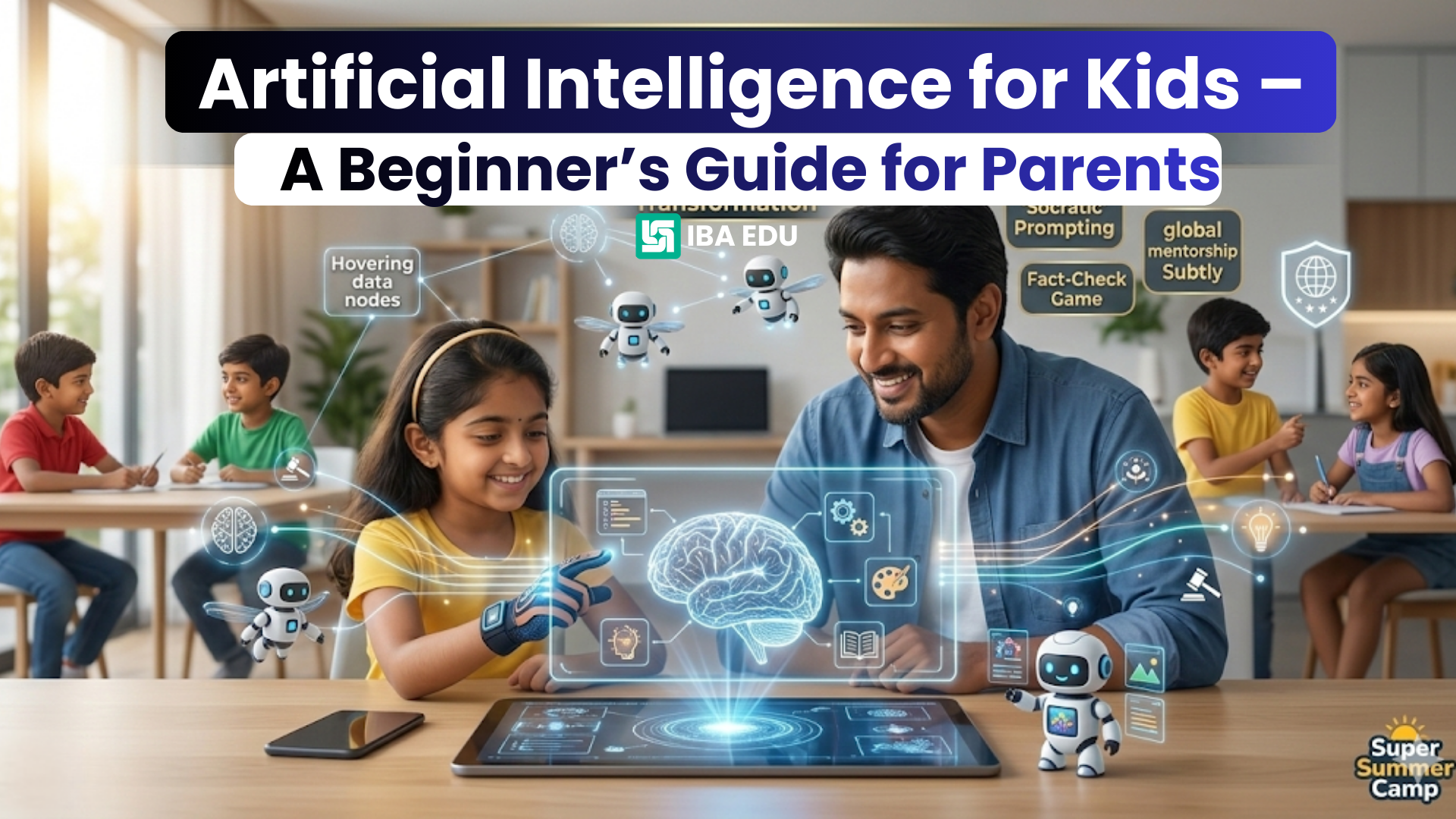
Artificial Intelligence for Kids – A Beginner’s Guide for Parents
From Mobile Scrolling to Meaningful Learning
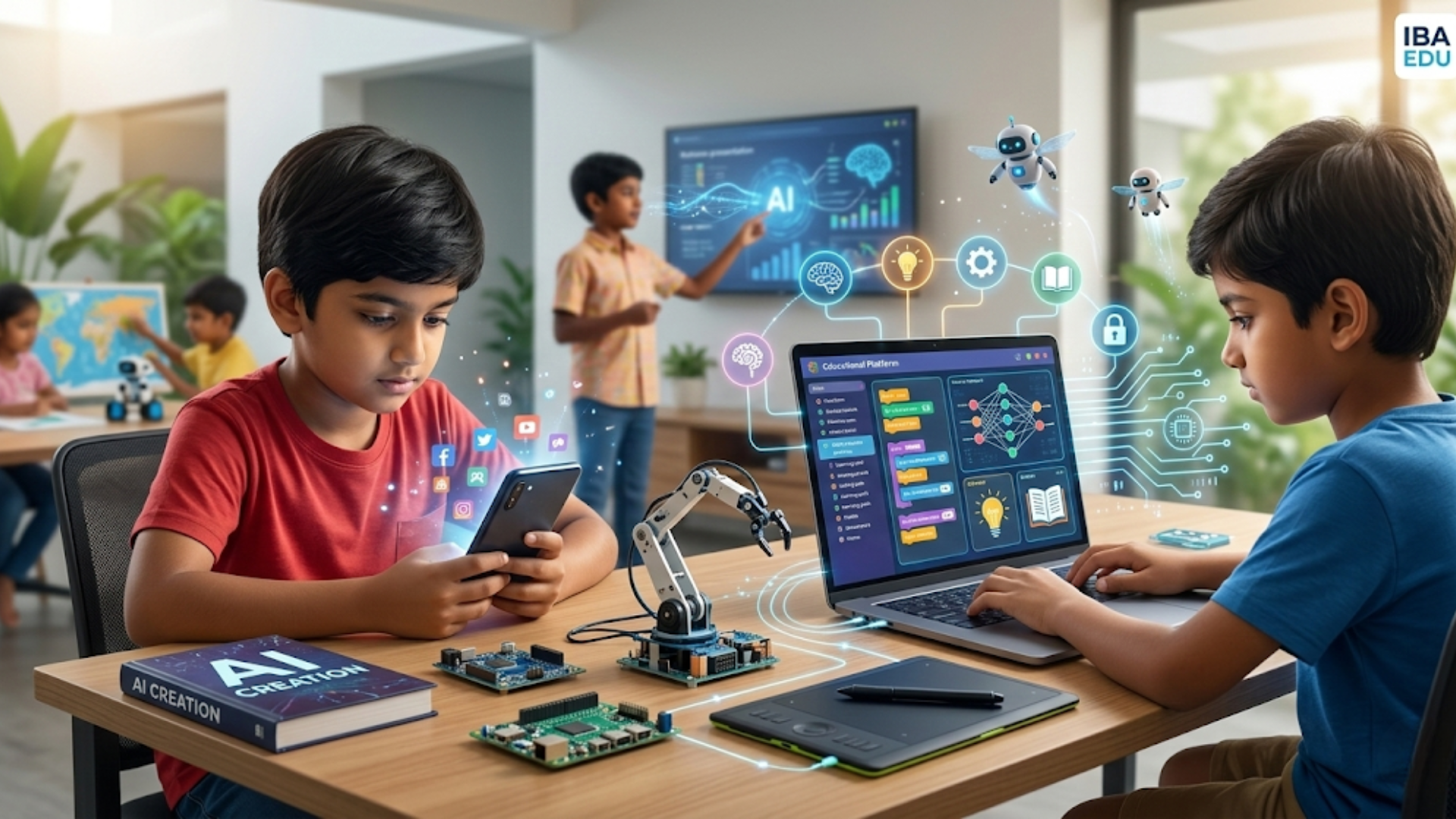
Picture a typical evening in many homes today.
A child is sitting on the sofa, eyes fixed on a mobile phone.
Videos keep playing. Games continue. Hours pass quickly.
Many parents quietly wonder:
-
“Is all this screen time helping my child learn anything useful?”
-
“Are they developing skills for the future?”
Technology is everywhere in children’s lives today. But most of the time, kids use technology mainly for entertainment.
They scroll. They watch. They play.
But what if that same technology could help children create, build, and innovate?
This is where Artificial Intelligence for kids becomes an exciting opportunity.
Instead of just consuming digital content, children can learn how to:
-
create games
-
build websites
-
generate creative digital projects
-
use smart tools to solve problems
AI learning for kids is not about turning children into programmers overnight.
It’s about helping them become creative thinkers and confident problem-solvers in a world that is increasingly powered by artificial intelligence.
What Is Artificial Intelligence?
Artificial Intelligence may sound complex, but the idea is actually simple.
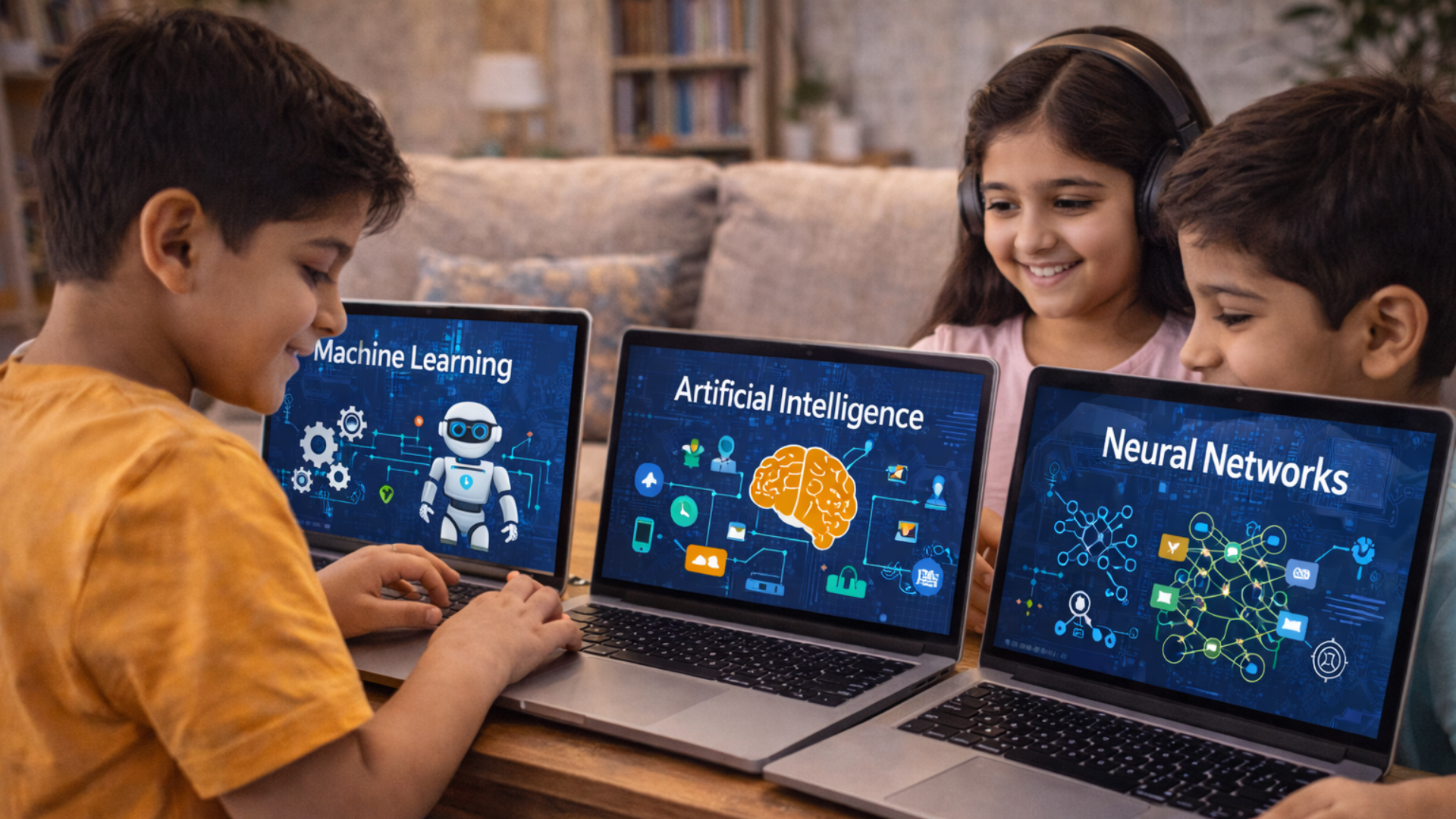
Artificial Intelligence, or AI, refers to computer systems that can learn, analyze information, and assist humans in performing tasks more intelligently.
In simple terms:
AI helps computers think and work smarter.
Many everyday technologies already use AI.
For example:
Voice Assistants
Tools like Alexa or Google Assistant respond to voice commands and answer questions.
Recommendation Systems
Platforms like YouTube or Netflix suggest videos and shows based on what you watch.
Smart Search Tools
Search engines can predict what you’re looking for and provide relevant answers quickly.
AI Image Generators
Creative tools can generate artwork or illustrations from simple text prompts.
Smart Writing Tools
AI tools can help generate stories, ideas, or presentations.
Children today are already interacting with AI tools daily—often without realizing it.
The difference is that AI education for children teaches them how to use these tools creatively and intelligently.
Why Artificial Intelligence Is Becoming an Essential Skill
Artificial Intelligence is not just a technological trend.
It is becoming one of the most important skills of the future.
AI is transforming almost every industry.
Healthcare
AI helps doctors analyze medical data and detect diseases earlier.
Education
AI-powered tools personalize learning experiences for students.
Finance
Banks and financial institutions use AI to analyze risks and detect fraud.
Technology
AI drives innovations in robotics, automation, and smart systems.
Business
Companies use AI to analyze data and make smarter decisions.
Children growing up today will enter a world where AI is deeply integrated into everyday work and life.
That’s why learning AI early can help kids develop future-ready skills.
Why Kids Should Start Learning AI Early
Introducing AI learning for kids at a young age offers many benefits beyond technology.
Here are some of the most important advantages.
1. Encourages Creativity
AI tools allow kids to turn ideas into digital creations.
They can:
-
create artwork
-
design games
-
write stories
-
generate presentations
Technology becomes a creative playground.
2. Improves Problem-Solving Skills
AI projects encourage children to:
-
analyze problems
-
think logically
-
test solutions
-
improve their ideas
These skills are valuable in every field.
3. Develops Critical Thinking
When kids work with AI tools, they learn how to question results, experiment with ideas, and refine their thinking.
This strengthens analytical abilities.
4. Builds Digital Literacy
Many children use devices but don’t fully understand technology.
AI education helps kids understand how digital tools actually work.
5. Encourages an Innovation Mindset
Children who learn AI begin to think creatively about solving problems.
They start asking questions like:
-
“Can I build something new?”
-
“How can AI help solve this problem?”
6. Builds Confidence
Creating digital projects gives children a sense of achievement.
Instead of just playing games, they begin building their own projects.
7. Prepares Kids for Future Careers
AI will influence almost every profession.
Early exposure helps children become comfortable with technology-driven careers.
8. Makes Screen Time Productive
Not all screen time is bad.
When children learn AI, screen time becomes learning time.
What Kids Can Actually Do with AI
Many parents assume AI learning involves complicated coding.
But modern AI courses for kids focus on creative and practical projects.
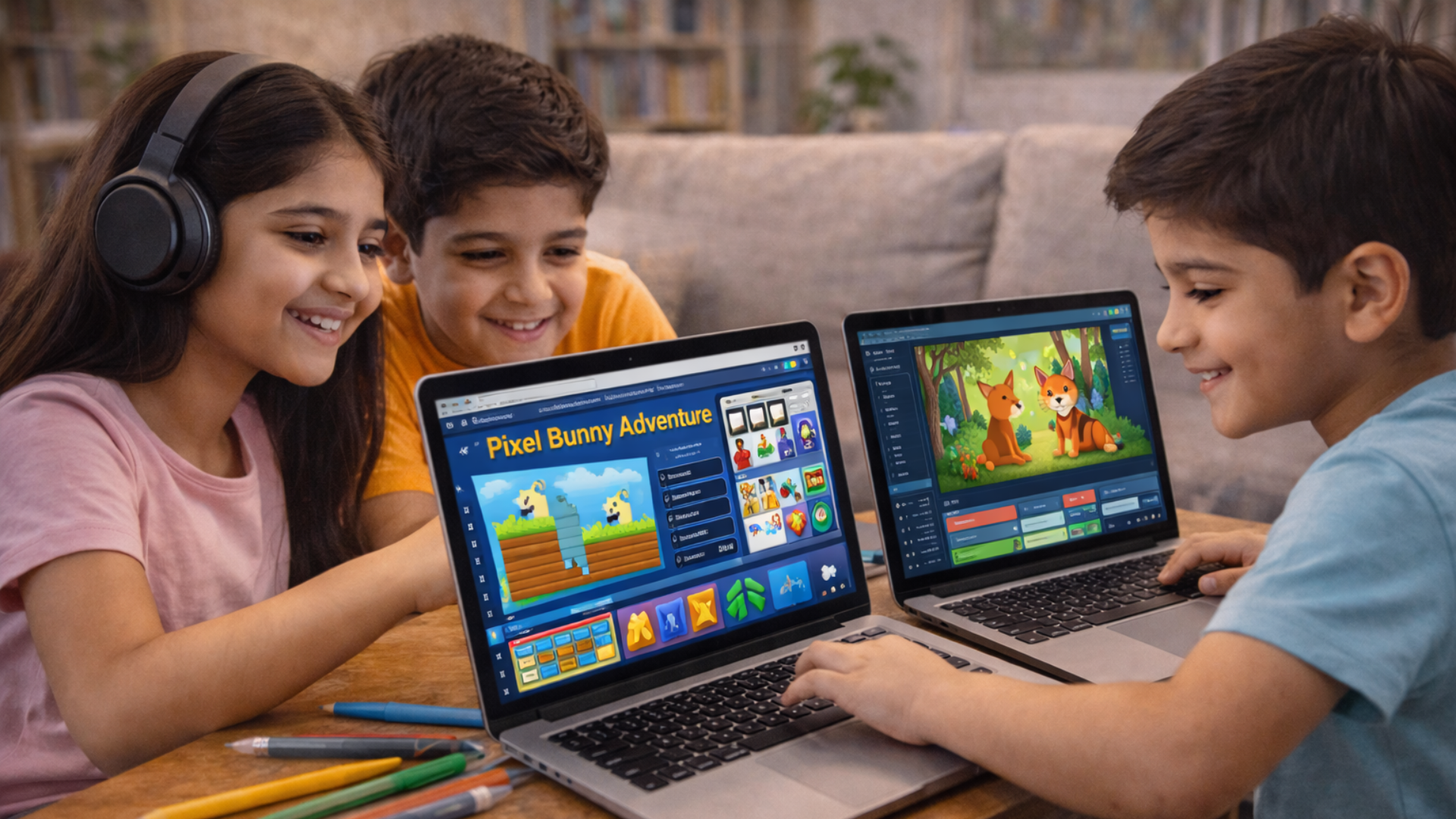
Children can learn to create many exciting things.
Create Simple Games
Kids can design basic games and interactive activities using beginner-friendly platforms.
Build Simple Websites
Children can learn how to create websites to showcase their projects and ideas.
Generate Digital Artwork
AI tools can help kids generate illustrations, characters, and creative visuals.
Create Stories and Books
Children can use AI tools to create:
-
storybooks
-
comic strips
-
digital presentations
Build AI-Powered Projects
Kids can experiment with AI tools to create simple automation ideas or digital assistants.
These projects make learning interactive and fun.
Addressing Parents’ Concerns About Technology
Many parents worry about screen addiction.
And rightly so.
But the real issue isn’t technology itself.
The issue is how technology is used.
There are two types of technology use.
Passive Technology Consumption
Examples include:
-
endless scrolling
-
watching short videos
-
repetitive gaming
-
social media browsing
This type of screen time rarely builds skills.
Productive Technology Learning
Examples include:
This type of technology use builds creativity, skills, and confidence.
When guided properly, technology can become a powerful learning tool.
The Best Age for Kids to Start Learning AI
Many parents ask:
“When is the right time to introduce AI to kids?”
The ideal age range is 5–15 years.
At this stage:
-
children are naturally curious
-
they enjoy exploring technology
-
they learn new tools quickly
-
they are eager to build creative projects
Early exposure allows children to develop confidence with technology before entering higher education.
How Parents Can Introduce AI Learning to Kids
Parents play a key role in shaping their child’s learning journey.
Here are some practical ways to introduce AI learning.
Encourage Curiosity
Ask your child questions like:
-
“What kind of app would you create?”
-
“What problem would you solve with technology?”
This stimulates imagination.
Explore Beginner AI Tools
Many beginner-friendly AI tools allow kids to experiment creatively.
These tools make learning fun and interactive.
Focus on Project-Based Learning
Children learn faster when they build things themselves.
Hands-on learning keeps them engaged.
Choose Structured Learning Programs
Guided programs provide the structure children need to understand concepts clearly.
Why Mentorship and Structured Learning Matter
Learning AI independently can sometimes be confusing for children.
Structured programs offer several advantages.
They provide:
-
step-by-step guidance
-
expert mentors
-
interactive learning environments
-
project-based assignments
-
peer collaboration
Mentorship helps children stay motivated and overcome challenges more easily.
A Great Way to Start: IBA EDU AI Summer Camp 2026
One of the best ways for kids to start exploring AI is through structured summer learning programs.
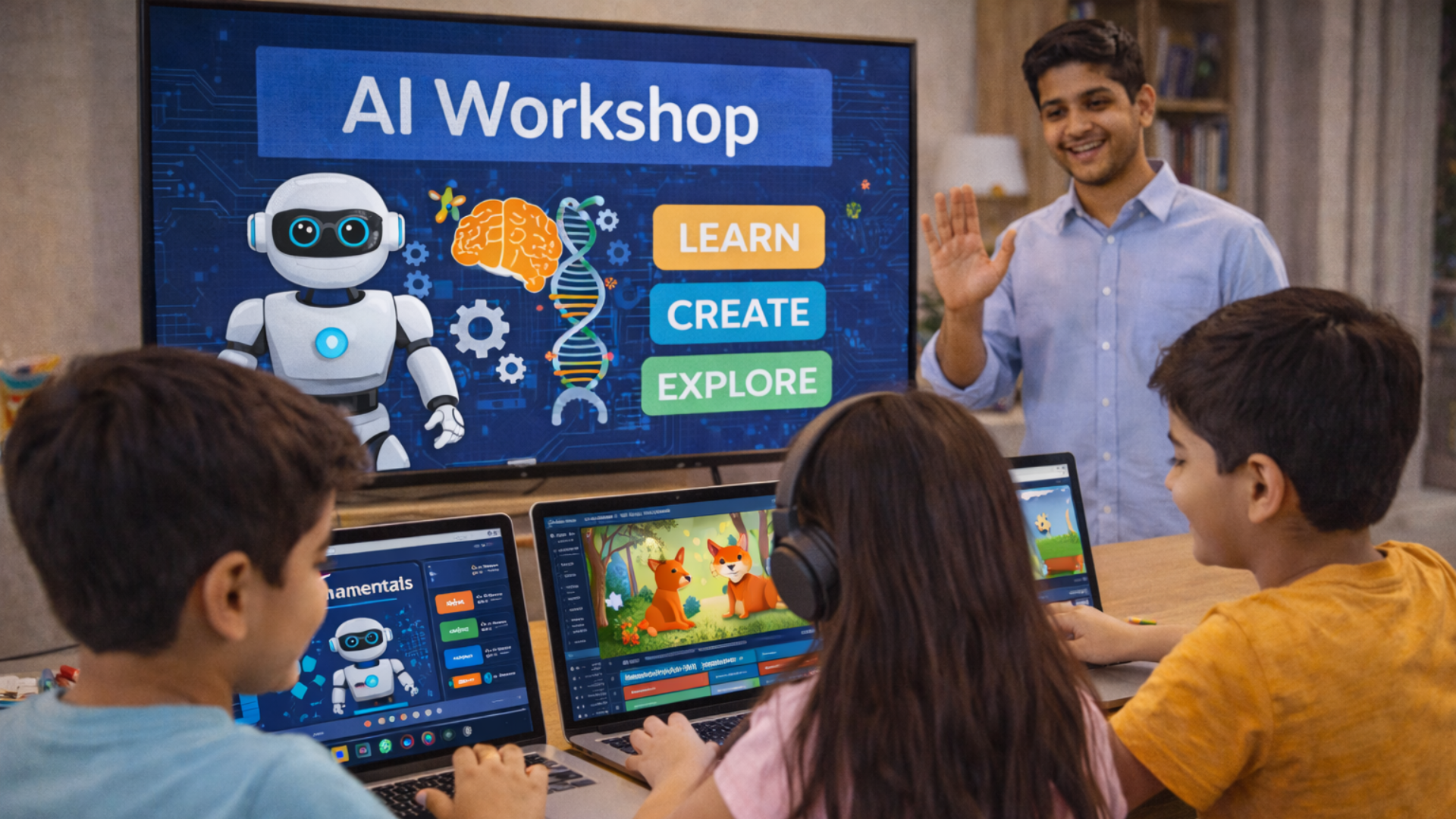
Programs like the IBA EDU AI Summer Camp 2026 are designed to introduce children to technology in a fun and engaging way.
During the program, children learn how to:
-
explore modern AI tools
-
develop digital creativity
-
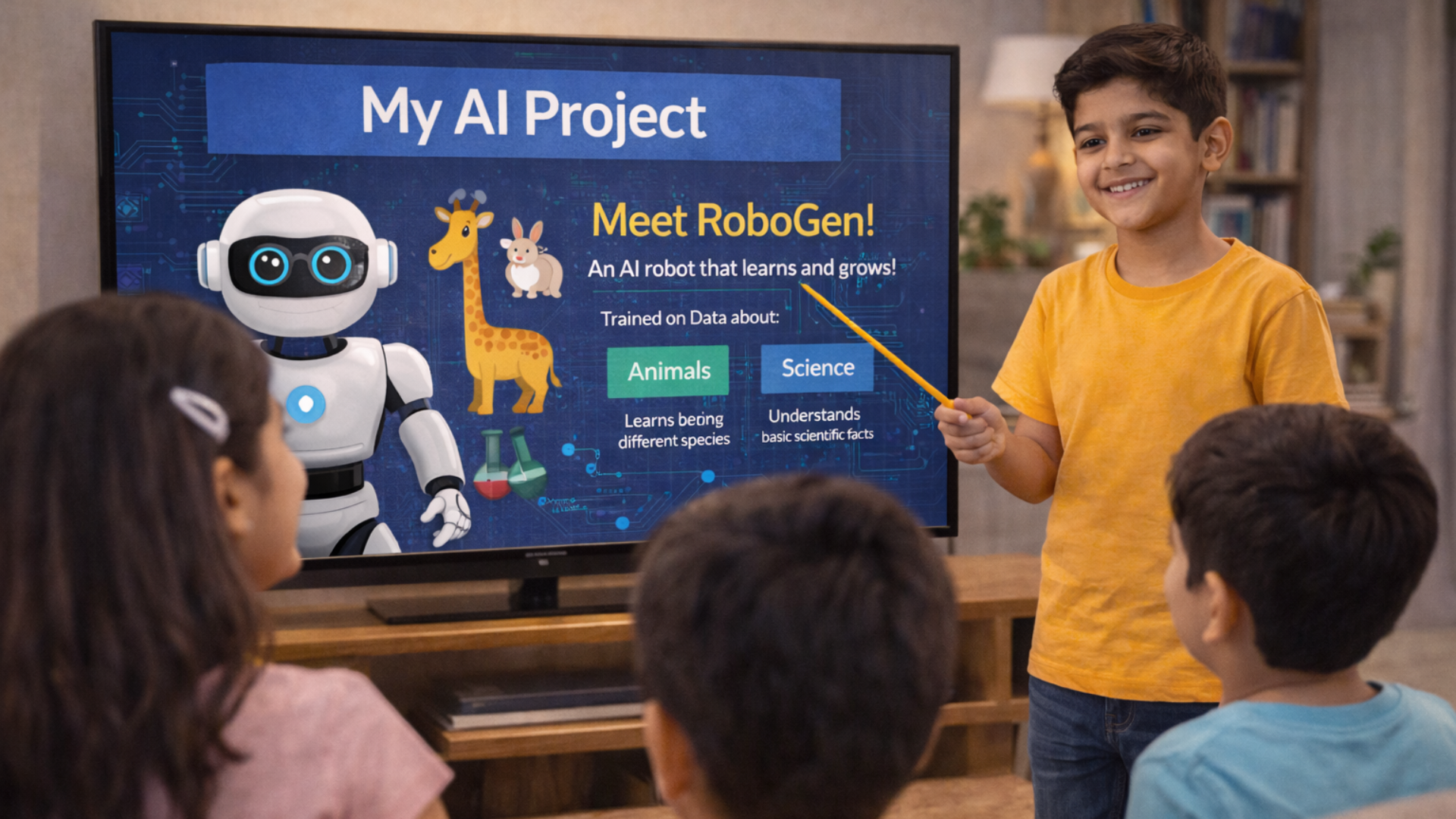
present their own technology projects
The program focuses on:
-
creativity
-
innovation
-
confidence building
-
future skills development
Instead of spending summer glued to mobile phones, kids can use their time to learn, build, and innovate.
Helping Children Prepare for the Future
The future will be shaped by technology, innovation, and artificial intelligence.
Children who understand technology early will be better prepared for tomorrow’s opportunities.
Parents have a powerful choice today.
They can allow children to remain passive technology users, or help them become creative technology builders.
By encouraging AI education for children, parents give their kids an important advantage in an AI-driven world.
Want your child to build games, websites, and AI-powered projects instead of spending summer scrolling on mobile phones?
Join the IBA EDU AI Summer Camp 2026.
Limited seats available.
Final Message for Parents
Artificial Intelligence is not just a technological trend.
It is becoming a fundamental skill of the future.
The earlier children begin exploring AI for kids, the more confident and capable they will become.
By guiding your child toward creative technology learning today, you are helping them build the skills they will need to succeed in tomorrow’s AI-powered world.
And the journey can start today. 🚀