Currently Empty: ₹0.00



Blog
AI Summit 2026 India: How the “AI for All” Revolution is Transforming the Global South
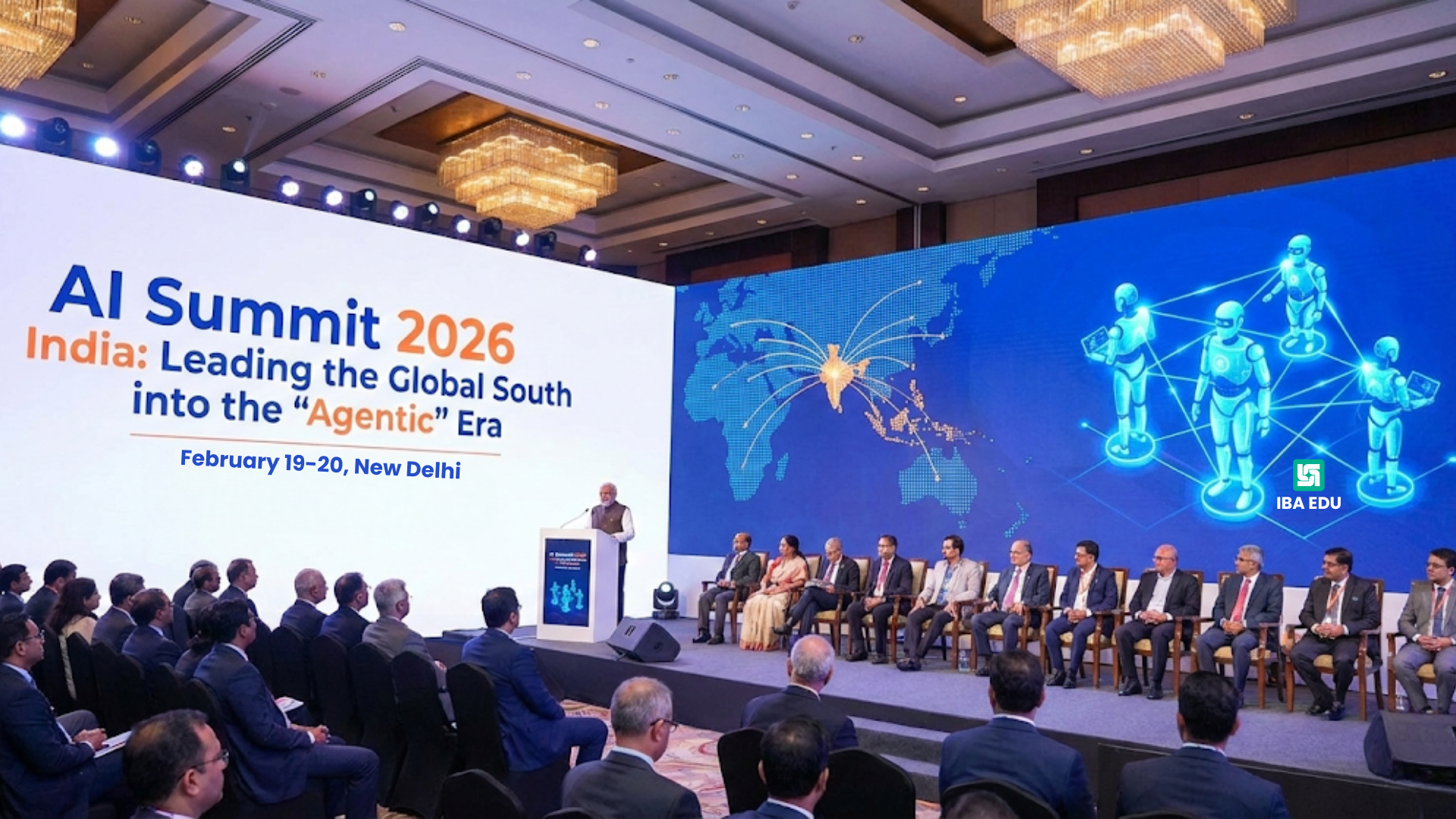
AI Summit 2026 India: Leading the Global South into the “Agentic” Era
As February 2026 unfolds, the eyes of the world are fixed on New Delhi’s Bharat Mandapam. The AI Impact Summit 2026 has officially marked a historic shift in the global technological landscape. Moving beyond the cautionary tales of the past, this summit has pivoted the conversation toward AI for Development, positioning India as the undisputed lighthouse for the Global South.
With Prime Minister Narendra Modi’s inauguration and the presence of world leaders like French President Emmanuel Macron and Brazilian President Luiz Inácio Lula da Silva, the message is clear: The future of AI will not be written in code alone, but in the lives it changes.
India: The AI Hub for the Global South
For decades, technological revolutions were dictated by the Global North. In 2026, India has flipped the script. Through the IndiaAI Mission, the government has moved from “regulation-first” to “innovation-first,” focusing on what they call the “Three Sutras”: People, Planet, and Progress.
Why is India becoming the hub for the Global South?
-
Digital Public Infrastructure (DPI): Just as UPI revolutionized payments, India is building an “AI Commons” – a shared framework of compute power and datasets that developing nations can use to leapfrog traditional developmental hurdles.
-
Sovereign AI: By developing 12 indigenous foundation models and onboarding over 38,000 GPUs, India is ensuring that AI remains inclusive, affordable, and culturally relevant.
-
Focus on Impact: Whether it’s MausamGPT for farmers or AI-driven healthcare in rural clinics, India is proving that AI can solve Human Development Index (HDI) challenges at scale.
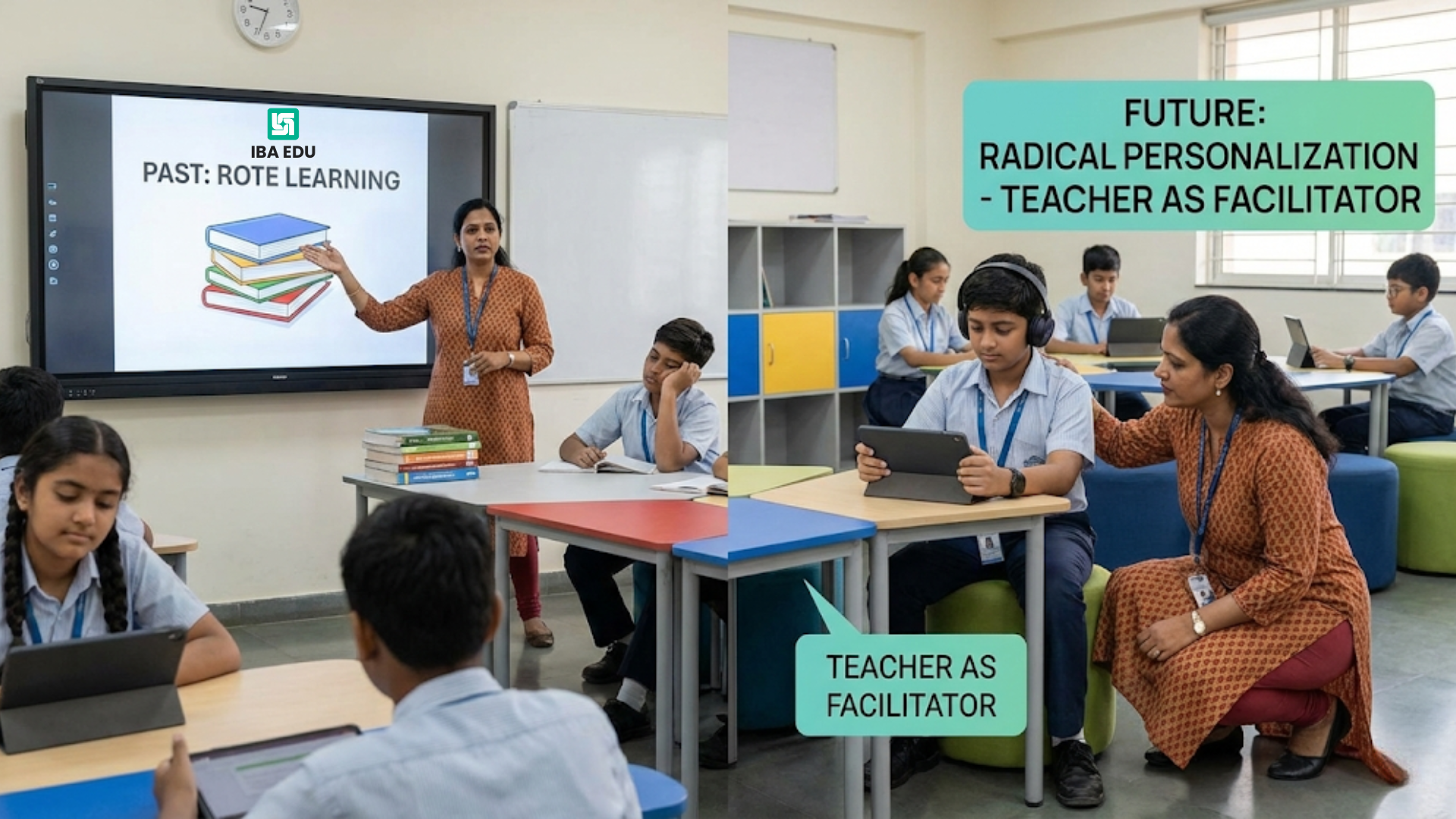
The Classroom Revolution: What Happens in the Next 5 Years?
Perhaps the most profound takeaway from the 2026 Summit is the YUVAi initiative and the integration of AI into school curriculums starting from Class 3. By 2031, the educational landscape will be unrecognizable.
1. For Students: From Rote Learning to Radical Personalization
Over the next five years, the “average” student experience will vanish.
-
Personalized Tutoring: AI agents will act as 24/7 mentors, adapting to a child’s specific learning pace and neurodiversity.
-
Breaking the Language Barrier: Students in rural India will access world-class Ivy League-level content in their local regional languages through real-time AI translation.
-
Creative Agency: With tools like Google Veo 3.1 and Nano Banana, students won’t just study history; they will “render” it, creating 4K cinematic simulations of the past as part of their projects.
2. For Teachers: The Shift from “Lecturer” to “Facilitator”
The fear that AI would replace teachers has been replaced by a new reality: AI is the teacher’s ultimate assistant.
-
Administrative Freedom: AI will handle 80% of routine tasks – grading, attendance, and lesson planning, giving teachers time to focus on mentorship and emotional intelligence.
-
Performance Analytics: Tools like NotebookLM will provide teachers with real-time “heatmaps” of student understanding, showing exactly who is struggling before the exam even starts.
The Roadmap to 2031: Challenges & Opportunities
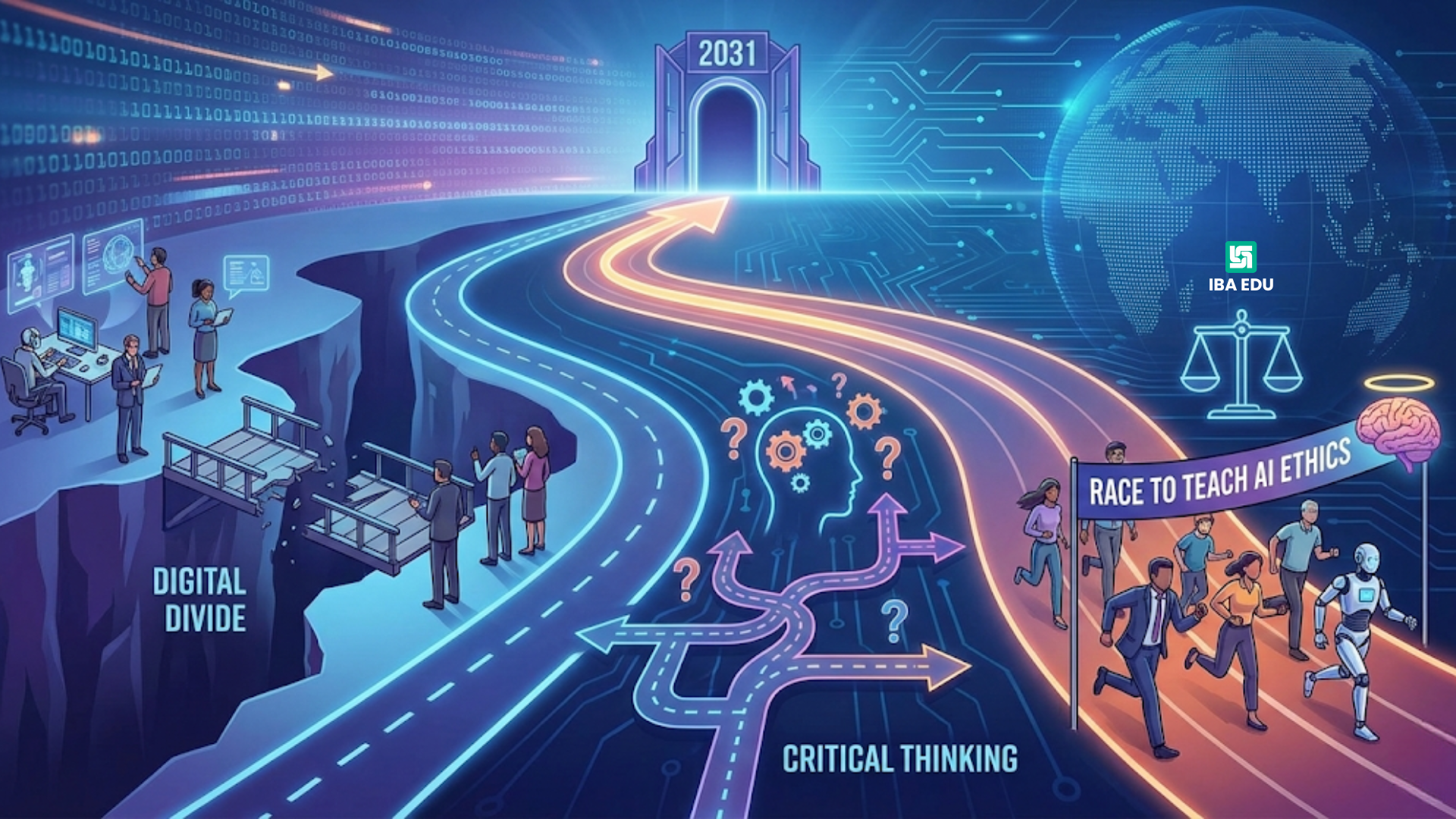
While the vision is bright, the Summit highlighted two critical hurdles: the Digital Divide and Critical Thinking. As we integrate AI, the goal for 2031 is to ensure a student in a remote village has the same compute access as a student in New Delhi.
Moreover, as world leaders noted, “Intelligence and rationality must go hand in hand.” The next five years will be a race to teach AI Ethics alongside technical skills, ensuring the next generation uses these “personal assistants in their pockets” to solve global challenges like climate change and social inequity.
From Global Vision to Personal Mastery
The AI Summit 2026 isn’t just a meeting of minds; it’s a declaration of independence for the Global South. As India leads this charge, the ripple effects will be felt in every classroom and every workplace. However, the true “AI Hub” isn’t just a country – it is the individual who learns to orchestrate these tools effectively.
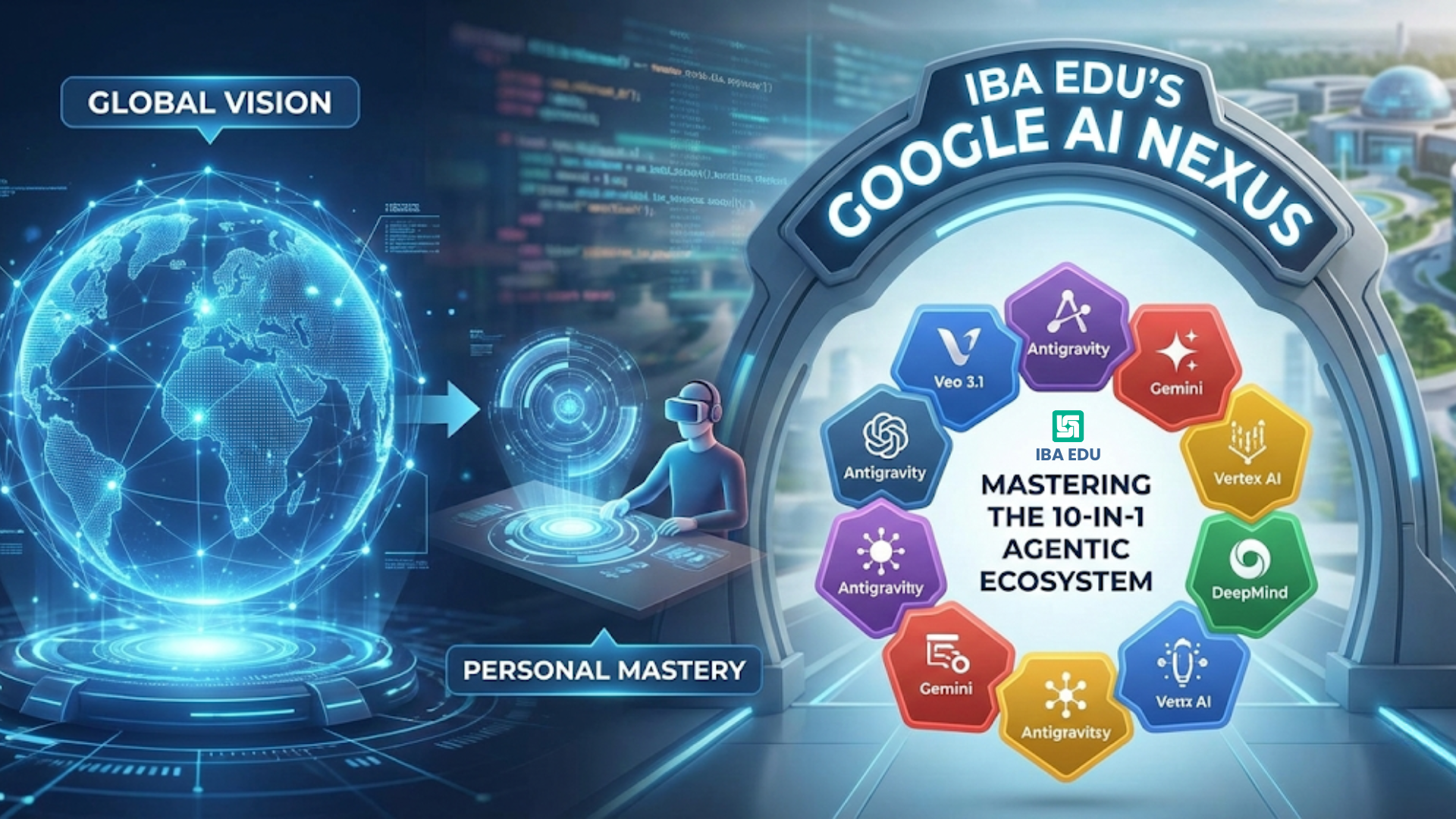
For those looking to move beyond the headlines and actually master this new landscape, programs like IBA EDU’s Google AI Nexus are bridging the gap between global trends and personal productivity. By mastering the 10-in-1 Agentic ecosystem – from Google Veo 3.1 to Antigravity – today’s professionals and students can ensure they aren’t just spectators of the AI revolution, but the architects of it.
The future is already here. The only question is: Are you in?
The 2026 Summit proved that ‘Prompting’ is no longer enough. Are you ready for the Agentic Era?
Master the Nexus Ecosystem for ₹999 | Talk to Student Counsellor
Frequently Asked Questions (FAQs)
1. What exactly is “Agentic AI” and why should I learn it in 2026? Unlike traditional AI that just responds to your prompts (Generative AI), Agentic AI can actually act on your behalf. It can plan, make decisions, and execute multi-step tasks across different apps autonomously. In 2026, knowing how to “chat” with a bot is a basic skill; knowing how to “orchestrate” a swarm of AI agents to do your work is what makes you high-value and “AI-proof.”
2. I am not a coder. Can I still join the Google AI Nexus program? Absolutely. One of the core themes of the 2026 AI Summit is the “democratization of technology.” Our program features Google Opal, a zero-code platform where you can build AI apps using just your voice or natural language (a trend often called “Vibe Coding”). You don’t need to know Python or Java to build professional-grade AI systems in this course.
3. What specific Google tools are covered in the 10-in-1 Mastery? This is the only curriculum in India that covers the full 2026 Google Labs stack in one bundle. You will get deep-dive modules on:
-
Intelligence: Google Gemini 3.1 & NotebookLM
-
Creative: Veo 3.1 (Cinematic Video), Nano Banana (4K Image Design), and Google Vids
-
Systems: Google Antigravity (Agent Development), Google Opal (No-code), and Whisk & Flow (Workflow Automation)
4. How will this course help me if I am a student or a teacher? For students, it teaches you to move from being a consumer of information to a creator of systems, giving you a massive edge in the 2026 job market. For teachers, the course shows you how to use AI assistants to handle 80% of your administrative work—like grading and lesson planning—so you can focus on high-impact mentorship.
5. Why is the course priced at ₹999 if the individual modules are worth much more? At IBA EDU, our mission aligns with the “AI for All” vision shared at the 2026 Summit. We want to ensure that high-quality, 2026-ready AI education is accessible to every Indian professional and student, regardless of their budget. This “Summit Special” price is a limited-time offer to help build India’s AI workforce.