Currently Empty: ₹0.00



Blog
AI Future Creators: A New Educational Framework That Makes Students Think Before They Prompt
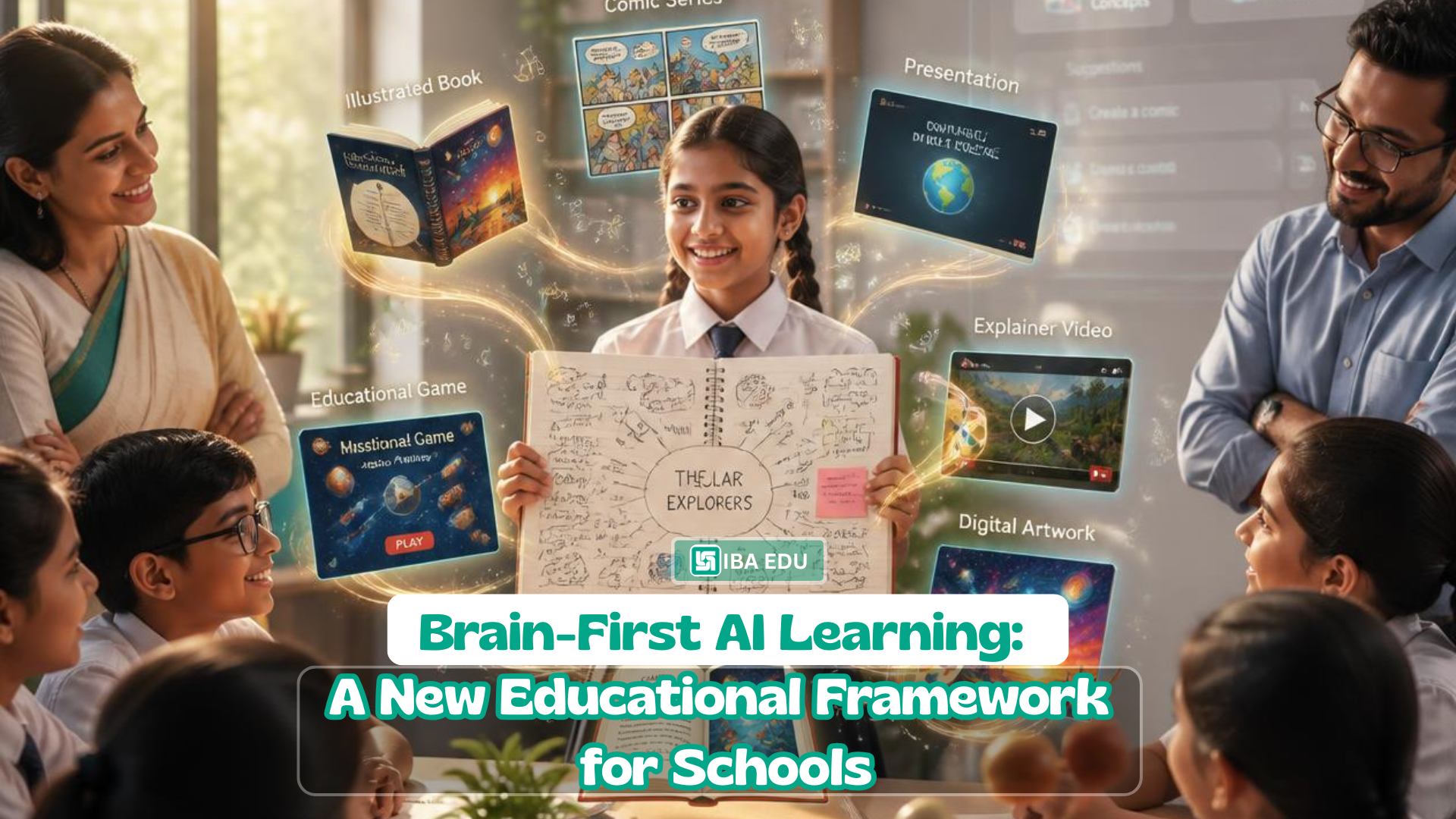
The rapid integration of Artificial Intelligence in education has presented school leaders with an unprecedented challenge: how to embrace technological advancement without compromising cognitive development. As AI tools become universally accessible, classrooms are witnessing the rise of “prompt dependency”—a phenomenon where students bypass critical thinking and outsource problem-solving to algorithms. To navigate this paradigm shift, IBA EDU introduces the AI Future Creators (AIFC) framework. Rooted in the philosophy of Brain-First AI Learning, this comprehensive pedagogical model ensures that students engage their own intellect—thinking, understanding, designing, and creating—before they leverage AI to enhance their work. This premium thought leadership article explores how schools can transition from producing passive AI users to cultivating visionary innovators, aligning with global future-ready standards and NEP 2020 competencies.
Key Takeaways for School Leaders
-
The Danger of Prompt Dependency: Unstructured AI access bypasses “productive struggle,” hindering neurological development and independent problem-solving.
-
Brain-First AI Philosophy: AI must serve as an amplifier of human creativity, never as a replacement for human thought. Students must learn to command technology, not rely on it.
-
The AIFC Creator Cycle: A proprietary 9-step pedagogical framework (Think → Understand → Imagine → Design → Create → Enhance with AI → Present → Reflect → Innovate) that secures academic rigor.
-
Curriculum Transformation: Routine textbook lessons can be converted into dynamic digital portfolios, games, podcasts, and storybooks through structured AI collaboration.
-
Teacher Empowerment: The framework elevates educators from knowledge dispensers to high-level facilitators and creativity coaches, supported by targeted “AI for Teachers” upskilling.
1. The AI Revolution Has Changed the Classroom Forever
Education is currently navigating the most profound technological disruption since the invention of the printing press. Historically, the primary function of a school was to democratize access to scarce information and build the foundational literacy required to interact with that information. Today, information is not just abundant; it is generative. Artificial Intelligence can synthesize centuries of human knowledge, draft comprehensive essays, write functional code, and produce hyper-realistic media in a matter of seconds.
For school principals, academic directors, and education trusts, this reality necessitates a fundamental reevaluation of what it means to be “educated.” If a machine can effortlessly perform the cognitive tasks historically used to measure student intelligence, the metrics of academic success must evolve.
A future-ready school curriculum can no longer be defined merely by the presence of smartboards or tablets. True innovation lies in pedagogy. The classroom of tomorrow must focus on developing the deeply human competencies that algorithms cannot replicate: empathy, moral reasoning, lateral thinking, visionary leadership, and complex problem-solving. The AI revolution has not made human intelligence obsolete; it has made human creativity the most valuable asset in the modern world.
2. The Hidden Problem: Students Are Learning to Prompt Before They Learn to Think
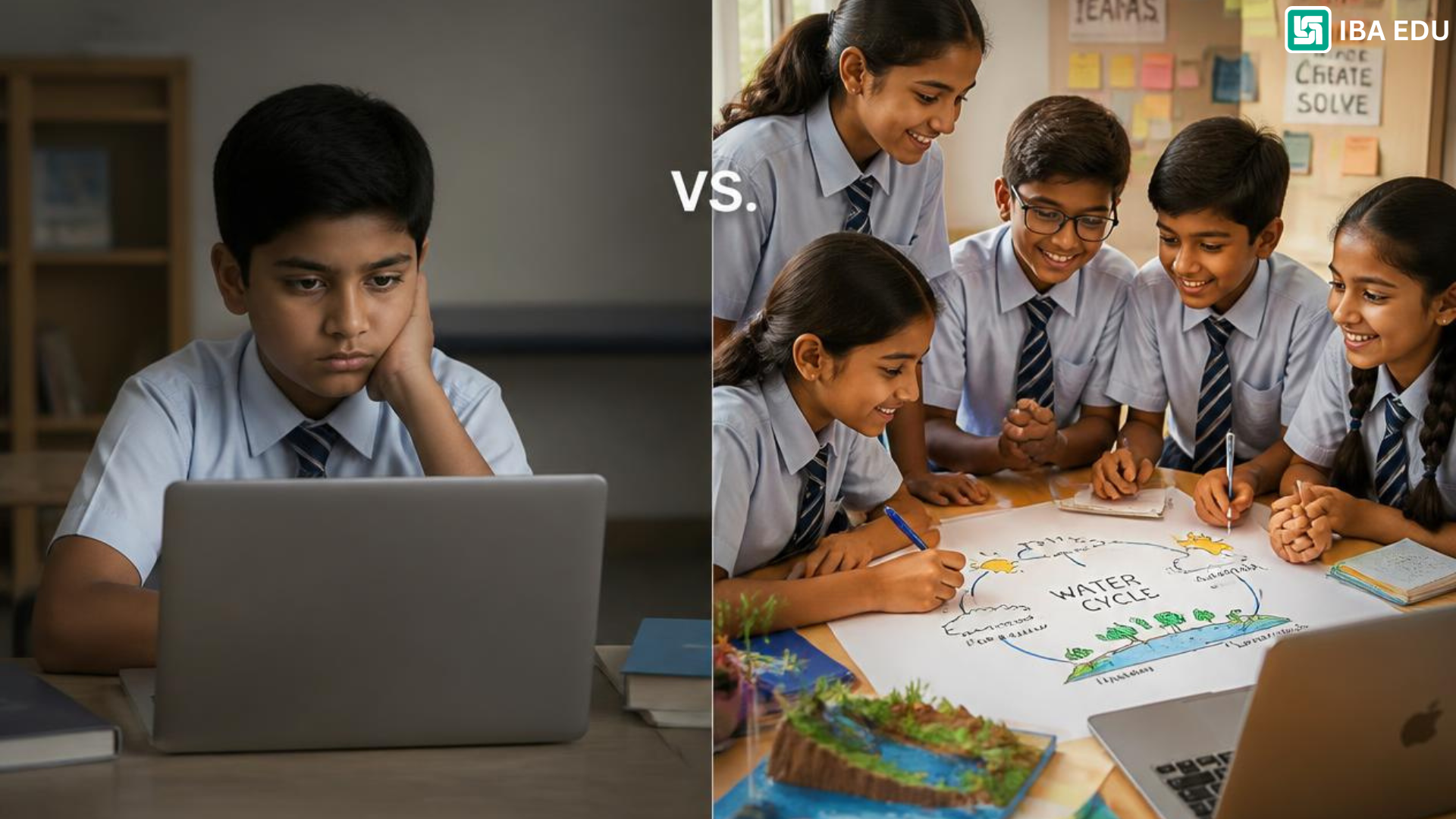
In the rush to modernize, many well-intentioned schools are making a critical error: they are providing students with unrestricted access to generative AI without a foundational cognitive framework. We are handing powerful cognitive tools to developing minds without teaching them the architecture of thought.
The result is a silent but pervasive crisis known as Prompt Dependency.
Prompt dependency occurs when a learner, faced with cognitive friction, immediately delegates the effort of thought to an AI interface. Instead of wrestling with a blank page, mapping out a hypothesis, or struggling through a complex equation, the student simply types a request.
The Symptoms of Prompt Dependency in the Classroom:
The Illusion of Understanding: Students can produce a perfect essay on quantum mechanics without grasping the underlying physics.
Erosion of Authentic Voice: Creative assignments lose their cultural nuance and individual personality, replaced by the statistically average tone of a Large Language Model.
Loss of Intellectual Stamina: Students give up quickly on complex, multi-step problems, having grown accustomed to instantaneous, AI-generated solutions.
Uncritical Acceptance: A dangerous tendency to accept AI hallucinations, inherent biases, and logical fallacies as absolute truth.
When students prompt before they think, they bypass the neurological “productive struggle” required to build long-term memory and cognitive resilience. Education ceases to be about human development and becomes an exercise in systems management.
3. The Shift from AI Users to AI Future Creators
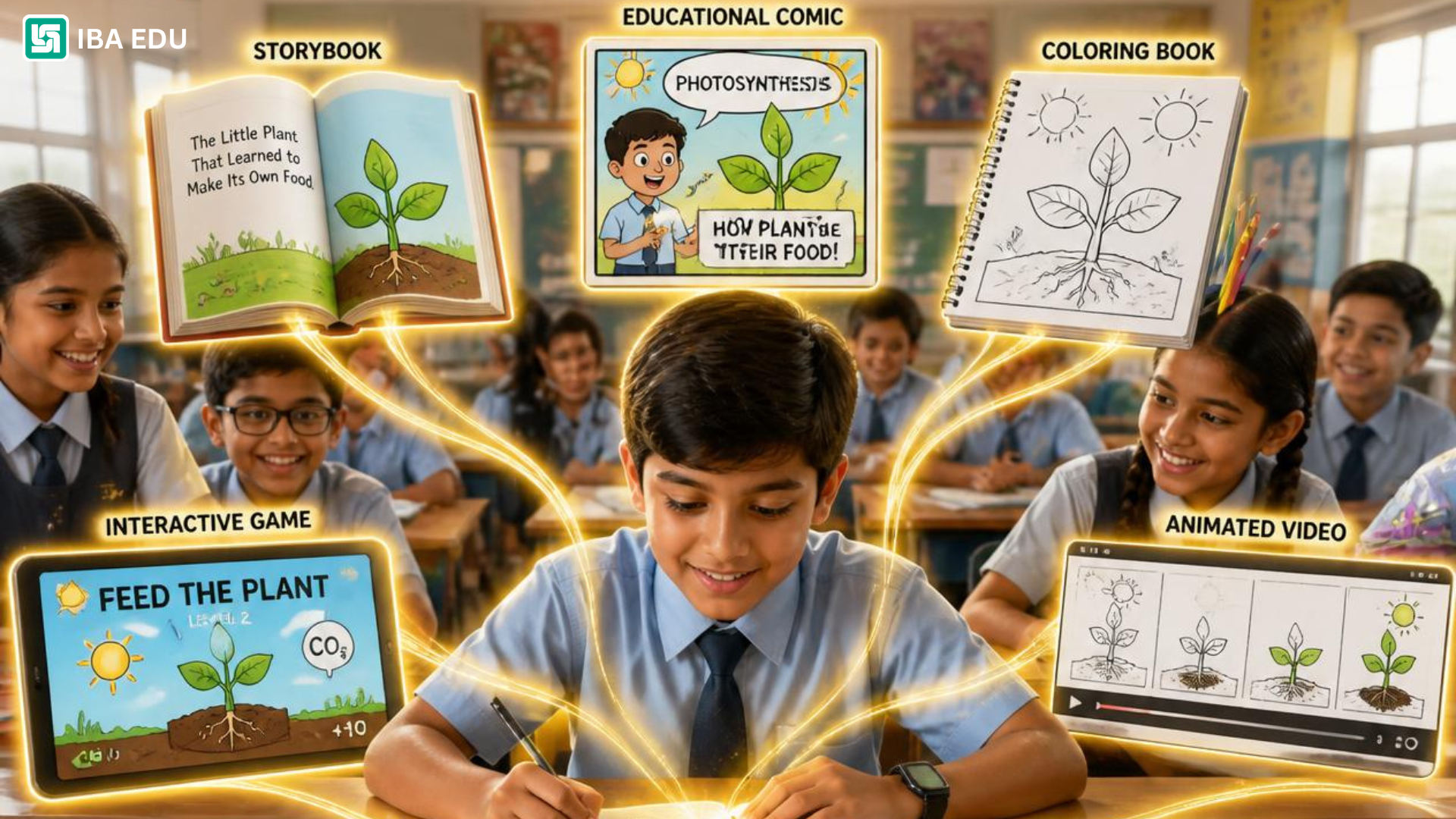
To safeguard the intellectual development of the next generation, schools must intentionally transition their student body from passive consumers of technology to active directors of it. We must stop raising “AI Users” and start cultivating “AI Future Creators.”
An AI User treats artificial intelligence as an oracle—a source of truth and a shortcut to completion. An AI Future Creator treats artificial intelligence as a highly capable production assistant—a tool to scale, refine, and polish their own original ideas.
The Paradigm Shift in Student Behavior
| Trait | The AI User (The Risk) | The AI Future Creator (The Goal) |
| Starting Point | Opens a chat interface and asks, “What should I do?” | Brainstorms on paper, sketches a vision, and defines the goal. |
| Role of AI | The Author / The Answer Key | The Co-Pilot / The Amplifier |
| Relationship with Tech | Dependent; intimidated by complex human tasks. | Empowered; commands the machine with authority. |
| Handling Errors | Blindly accepts hallucinations as facts. | Critically evaluates, debugs, and corrects the AI. |
| Output Quality | Generic, homogenized, and easily replicable. | Authentic, deeply personalized, and highly innovative. |
This transition does not happen accidentally. It requires a deliberate, structured, and pedagogical intervention.
4. Introducing the AI Future Creators (AIFC) Framework
To operationalize this paradigm shift, IBA EDU has developed the AI Future Creators (AIFC) framework. This is not merely an “AI Course” to be taught once a week in a computer lab. It is a comprehensive, school-wide educational philosophy built on the foundation of Brain-First AI Learning.
The core premise of the AIFC framework is simple but revolutionary: Technology must serve human intention.
By embedding Brain-First learning into the DNA of a school’s curriculum, the AIFC framework ensures that technological integration actively strengthens academic rigor. It bridges the gap between traditional academic standards and the demand for 21st-century digital fluency, ensuring that students develop as independent thinkers who use AI responsibly and creatively.
5. The AIFC Creator Cycle Explained
At the heart of this framework is the proprietary AIFC Creator Cycle. This 9-step pedagogical loop can be applied to any subject, any grade level, and any academic standard. It ensures that the human brain remains the primary engine of creation.
-
Think: The cycle begins away from screens. Students are presented with a challenge, a core concept, or a real-world problem. They engage their raw cognitive faculties, asking questions and cultivating curiosity.
-
Understand: Academic rigor is established. Students dive into textbooks, primary sources, and teacher-led instruction to grasp the foundational principles. (You cannot prompt an AI to design a sustainable bridge if you do not understand the physics of load-bearing structures).
-
Imagine: The incubation phase. Students brainstorm lateral solutions, free from the constraints of “the right answer.”
-
Design: Ideas are structured. Students create mind maps, storyboards, flowcharts, or architectural sketches by hand. They build the blueprint of their vision.
-
Create: Students produce the first draft of their project—writing the initial code, drafting the essay outline, or solving the base equations—using their own intellectual effort.
-
Enhance with AI: Only at this stage is AI introduced. The student, acting as the director, commands the AI to elevate their human draft. They might use a language model to debate their hypothesis, an image generator to bring their storyboard to life, or a data tool to visualize their math equations.
-
Present: Students showcase their work. Crucially, they must defend their creative choices and articulate how they managed the AI to achieve their specific vision.
-
Reflect: A metacognitive review. Students analyze the collaboration: Where was the AI biased? What did it get wrong? How did my original idea evolve?
-
Innovate: Students take the synthesized knowledge and technological fluency and apply it to a new, cross-disciplinary challenge.
6. Why Thinking Before Prompting Changes Learning
“When a student thinks first, they approach the machine not with a blank mind seeking direction, but with a clear vision seeking scale.”
Embedding the “Think and Design” stages before the “Enhance with AI” stage fundamentally alters the neurobiology of learning in the classroom.
First, it preserves the intrinsic motivation to learn. If a student’s ultimate goal is to use AI to build a functional, playable historical video game, they suddenly possess a burning desire to understand the historical facts required to prompt the AI accurately. The textbook is no longer a chore; it is the raw material for their creative vision.
Second, it builds executive functioning. Directing an AI requires high-level linguistic precision, logical sequencing, and parameter setting. A student must learn to act as a manager, evaluating the AI’s output against their original design and iterating until the machine produces exactly what the human envisioned.
7. Transforming Core Subjects into Creative Experiences
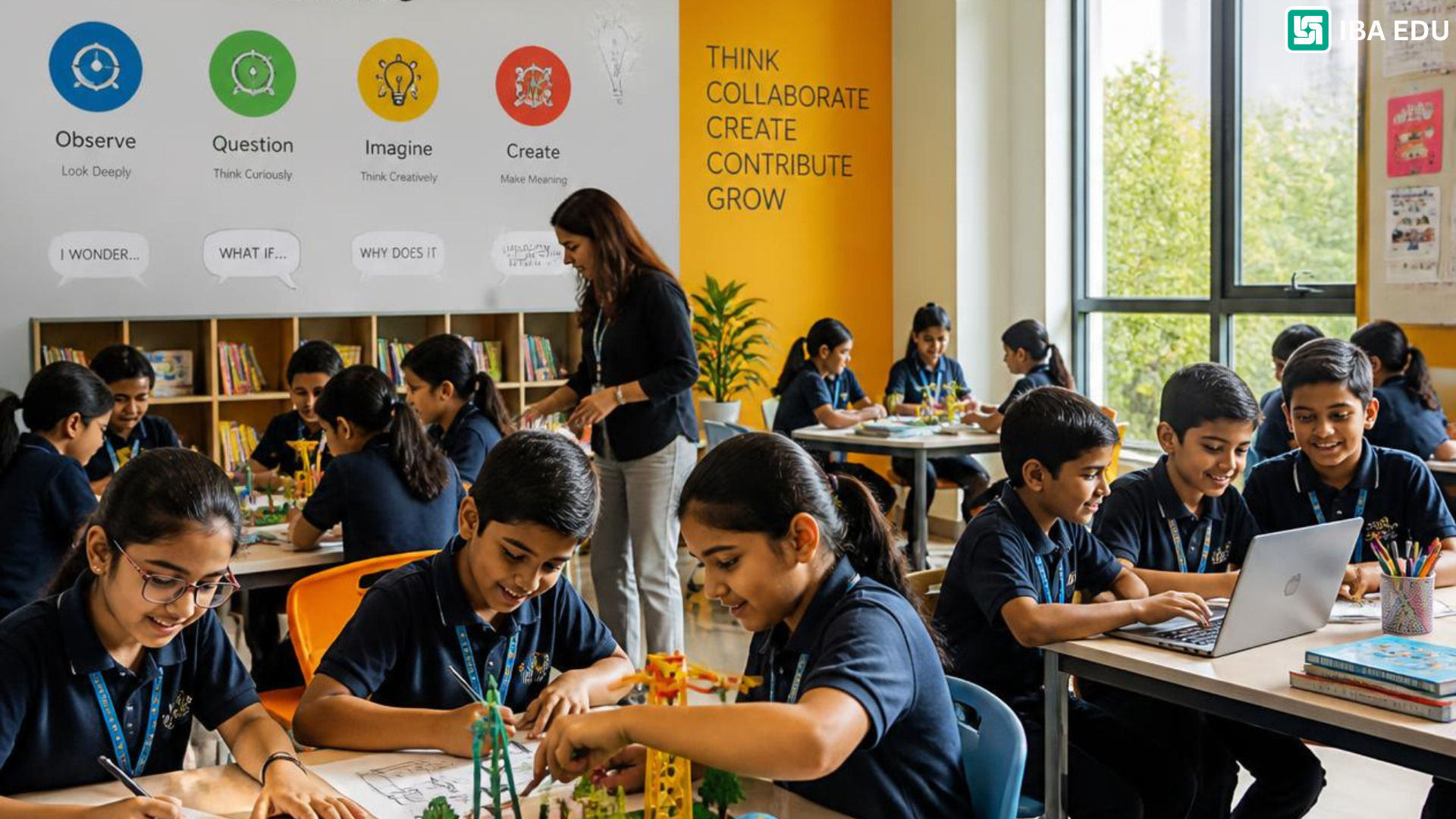
The true power of the AIFC framework lies in its ability to take standard, often rigid academic subjects and transform them into dynamic laboratories of creation. Here is how traditional textbook lessons are converted into extraordinary media using the Brain-First approach.
🔬 Science & EVS: From Memorization to Simulation
-
The Old Way: Memorizing the water cycle from a 2D textbook diagram.
-
The AIFC Way: Students Understand the stages of evaporation and condensation. They Design a storyboard for an educational video aimed at younger children. After writing the script themselves (Create), they use generative AI video tools (Enhance with AI) to produce a high-quality, animated documentary, complete with their own recorded voiceovers. Science becomes digital storytelling.
📐 Mathematics: From Worksheets to Interactive Games
-
The Old Way: Solving 30 identical fraction problems on a worksheet.
-
The AIFC Way: Students Understand fractions as parts of a whole. They Imagine a pizza-shop management game. They manually map out the logic and scoring system (Design). Then, acting as lead developers, they partner with an AI coding assistant (Enhance with AI) to write the Python or Scratch code to make their math game playable. Mathematics becomes interactive software engineering.
✍️ English & Languages: From Essays to Published Media
-
The Old Way: Writing a standard 5-paragraph essay on a local folktale.
-
The AIFC Way: Students study narrative arcs and character development (Understand). They draft their own unique retelling of the folktale (Create). They then act as art directors, prompting AI image generators to create specific, culturally accurate illustrations to accompany their text (Enhance with AI). The final output is a beautifully formatted, digital comic book or graphic novel. Language arts becomes publishing.
🌍 Social Science: From Dates to Hyper-Reality
-
The Old Way: Reading about the industrial revolution and taking a multiple-choice quiz.
-
The AIFC Way: Students research the socio-economic impacts of the era. They write a debate script between a factory owner and a worker (Create). They utilize AI voice-synthesis tools (Enhance with AI) to produce a historical podcast, critically analyzing the AI’s tone to ensure it reflects the emotional reality of the historical period (Reflect). History becomes immersive journalism.
8. A Brain-First Classroom in Action
Imagine stepping into a modern middle-school classroom operating under the AIFC framework.
It is not quiet, and students are not staring blankly into screens. The room is buzzing with collaborative energy. In one corner, three students are gathered around a large whiteboard, arguing passionately about the zoning laws for an eco-city project, drawing complex flowcharts with markers.
Only after the teacher reviews and approves their handwritten blueprint do they open their laptops. They feed their specific mathematical constraints into an AI architectural rendering tool, gasping as their manual calculations are transformed into a stunning, 3D visualization of a sustainable urban grid.
The technology is invisible until it is necessary. The room is defined by human energy, debate, and physical creation. The AI is simply the paint; the students are the master artists.
9. Age-Wise Implementation: From Primary to Higher Secondary
The Brain-First AI Learning philosophy scales elegantly across developmental stages, ensuring age-appropriate cognitive challenges.
Grades 2–5: Cultivating Wonder and Safety
At the primary level, the focus is on tactile creation and experiencing AI as a “magic mirror” for their imagination. Devices are heavily restricted.
-
Application: Children draw a monster with crayons, labeling its habitats and diet (EVS integration). The teacher takes a photo of the drawing and, on a shared smartboard, the class uses an AI tool to bring the monster to life in a 3D animation. The lesson focuses on vocabulary, creativity, and the safe, guided awe of technology.
Grades 6–8: Systems, Logic, and Co-Creation
Middle schoolers are highly social and capable of abstract thought. The focus shifts to project-based learning and understanding systems.
-
Application: Students study ancient civilizations and work in teams to design the economic system of a new society. They do the math manually, write the laws, and then use AI text models to pressure-test their laws through roleplay scenarios (e.g., “Act as a merchant in our city. How would this tax law affect you?”).
Grades 9–12: Advanced Innovation and Ethics
High school students are treated as pre-professionals. The focus is on complex problem-solving, ethical AI usage, and building verifiable portfolios for university admissions.
-
Application: A student researching climate change builds a functional data-dashboard. They use advanced AI to scrape and visualize complex datasets, while simultaneously writing a rigorous ethical reflection on the biases present in the AI’s data modeling. They graduate with a digital portfolio of professional-grade work.
10. The Evolving Role of Teachers: Facilitators and Creativity Coaches
A common fear among educators is that AI will replace them. The AIFC framework proves the exact opposite: in an era of abundant, AI-generated content, the deeply human role of the teacher is elevated to unprecedented importance.
When a machine can deliver a lecture and grade a multiple-choice test instantly, the teacher is freed from administrative drudgery. They transition into the roles of Instructional Designers, Mentors, and Creativity Coaches.
Teachers in an AIFC ecosystem focus on:
-
Designing the complex, real-world prompts that kick off the Creator Cycle.
-
Guiding students through the emotional frustration of the “productive struggle.”
-
Teaching digital empathy and ethical reasoning.
-
Curating the classroom environment to foster psychological safety for bold ideation.
To achieve this, schools must invest in comprehensive AI for Teachers upskilling programs. Educators cannot facilitate a Brain-First AI classroom if they themselves are intimidated by the technology. By providing structured professional development, school leaders empower their academic staff to become confident architects of future-ready learning.
11. Future-Ready Skills Students Develop Through AIFC
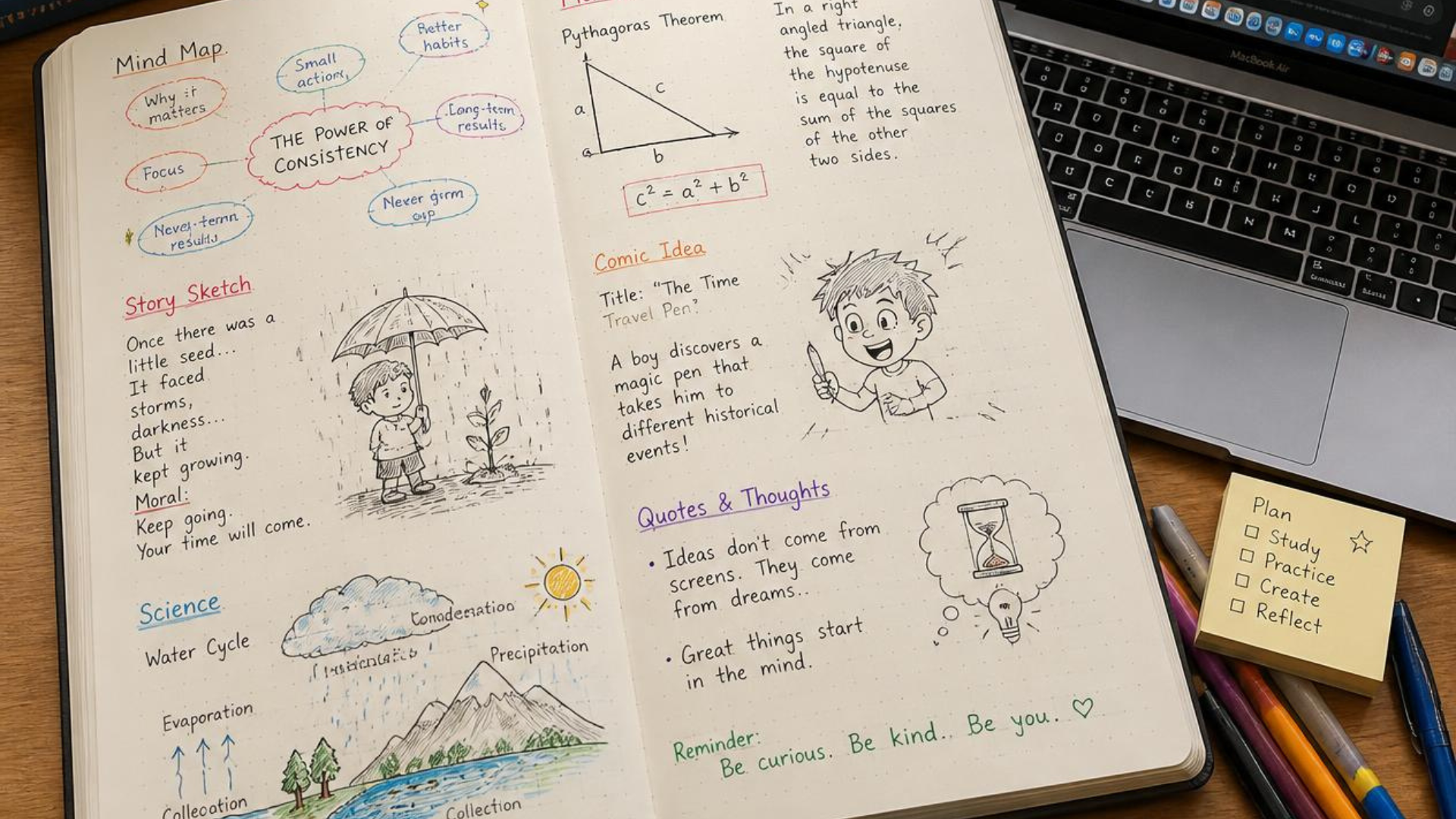
By consistently moving through the Brain-First cycle, students naturally develop a robust matrix of competencies highly sought after by modern universities and global employers:
-
Prompt Engineering & AI Literacy: The ability to communicate with machines using precise, logical, and context-rich language.
-
Critical Thinking & Fact-Checking: An automatic reflex to question, verify, and debug information generated by algorithms.
-
Creative Confidence: The self-assurance that comes from knowing one’s unique human ideas are valuable and capable of being realized.
-
Complex Problem Solving: Breaking down massive, abstract challenges into manageable, design-oriented steps.
-
Ethical Leadership: Understanding the moral implications of technology, data privacy, and intellectual property.
12. Building Student Portfolios Instead of Only Report Cards
Standardized tests assess what a student has memorized; portfolios demonstrate what a student can do.
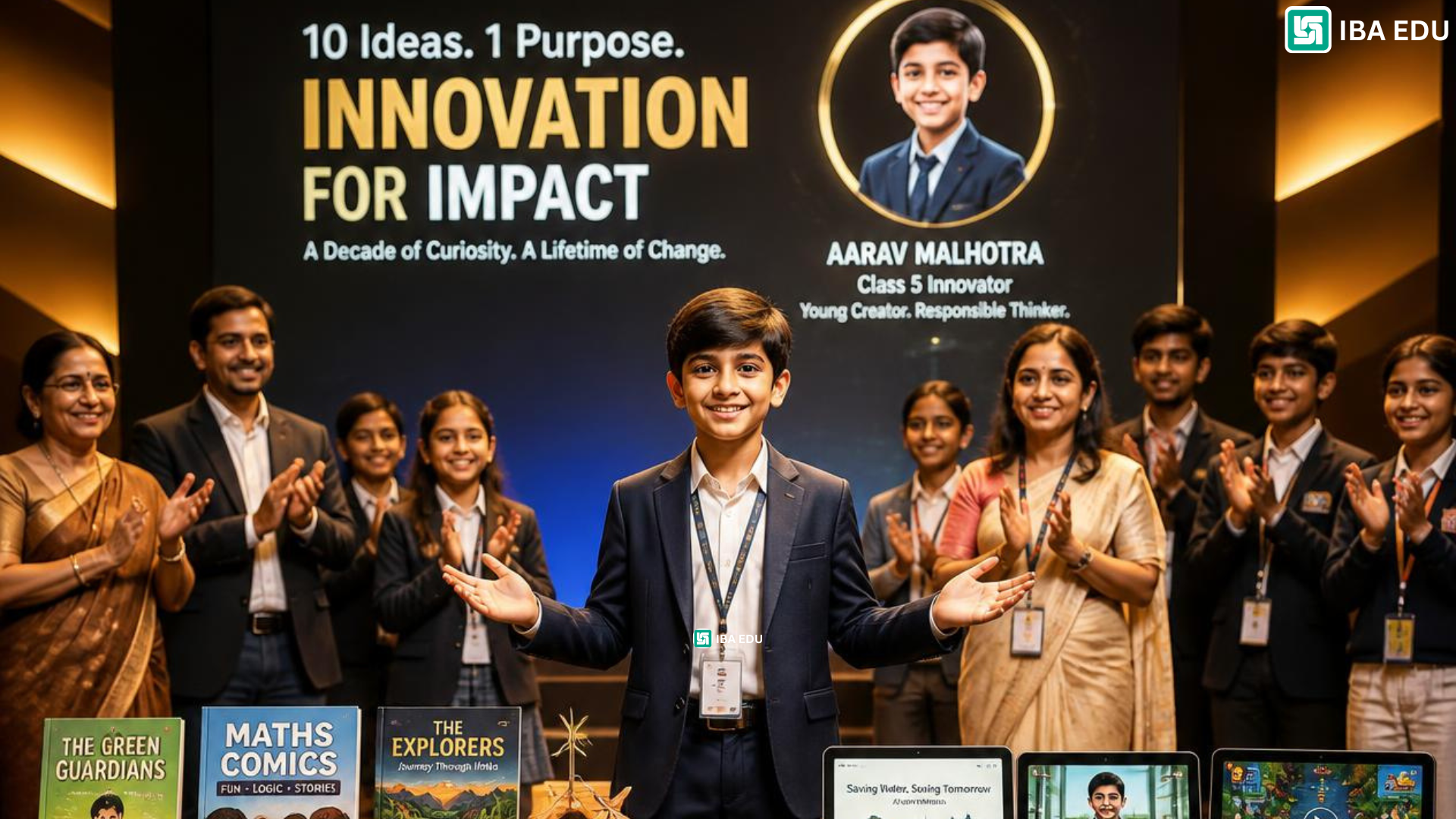
One of the most profound outcomes of the AIFC framework is the natural generation of high-quality digital assets. Because standard assignments are transformed into podcasts, games, websites, and digital books, students spend their academic careers building an expansive, public-facing portfolio.
When a student applies to a premier university or a future employer, they do not just present a transcript with an “A in Physics.” They present a link to the interactive, AI-enhanced physics simulation they designed, coded, and published in the 10th grade. This provides an undeniable, verifiable proof of competency that sets AIFC students apart globally.
13. Strategic Benefits for the Entire School Ecosystem
Adopting the Brain-First AI Learning philosophy creates a cascading series of benefits for all stakeholders in the education trust.
| Stakeholder | Key Benefits of the AIFC Framework |
| School Management & Principals | Positions the institution as a cutting-edge, premium brand. Attracts forward-thinking parents, modernizes the curriculum without losing academic rigor, and ensures compliance with future-ready education standards. |
| Teachers | Eliminates the fear of AI plagiarism, reduces administrative burnout, and restores the joy of deep, meaningful student mentorship. |
| Parents | Provides peace of mind that their child’s “screen time” is highly productive. Reassures them that the school is actively future-proofing their child’s career prospects in an uncertain AI economy. |
| Students | Transforms school from a place of passive listening into a thrilling laboratory of creation. Builds massive self-esteem and genuine technological mastery. |
14. Alignment with NEP 2020 Competencies and Responsible AI
For schools operating within India, the AI Future Creators framework is the ultimate vehicle for actualizing the vision of the National Education Policy (NEP) 2020.
NEP 2020 mandates a definitive shift away from rote memorization and toward competency-based, experiential, and project-based learning. It explicitly calls for the integration of emerging technologies to foster 21st-century skills, digital literacy, and holistic development.
The AIFC Creator Cycle is inherently project-based. It forces multidisciplinary integration (combining art, tech, and core subjects) and relies heavily on formative, peer-reviewed presentation stages. Furthermore, the “Reflect” stage of the AIFC cycle guarantees that Responsible AI practices—understanding bias, digital footprint, and ethical tech consumption—are woven into the daily fabric of the classroom, exactly as NEP 2020 envisions.
15. Why AIFC is an Educational Framework, Not Just an AI Course
It is crucial for academic directors to recognize the distinction between teaching about AI and teaching with AI.
Teaching about AI is a computer science class—learning how neural networks function or how to program in Python. While valuable, it is a siloed subject.
Teaching with AI through the AIFC framework is a pedagogical overlay that transforms every subject. It is an operating system for the entire school. It dictates how an English teacher approaches a poetry assignment, how a Science teacher designs a lab report, and how a History teacher assesses comprehension. It is a unified philosophy that ensures consistency, rigor, and cognitive protection across the entire campus.
16. The Call to Build Architects of the Future
If we view education merely as the transfer of information, then Artificial Intelligence has already rendered schools obsolete. But if we view education as the profound, complex, and beautiful process of human development, then schools have never been more important.
The AI revolution demands a choice from today’s educational leaders. We can passively allow our students to become dependent operators of intelligent machines, or we can proactively design environments that forge them into brilliant, empathetic, and visionary creators who use machines to build a better world.
Thinking must always precede prompting. The human mind must always lead the algorithm.
This is the promise of Brain-First AI Learning. By adopting the AIFC framework, your school does not just prepare students for the future; it equips them to design it.
Transform Your Institution with IBA EDU
Are you ready to elevate your school’s curriculum, empower your teaching staff, and ensure your students become the visionary thinkers the future demands? The AI Future Creators (AIFC) program provides the comprehensive training, curriculum architecture, and strategic support your school needs to implement Brain-First AI Learning. Connect with IBA EDU today to build an ecosystem where human intelligence leads innovation.
